Introduction
You walk into a concert hall, a comedy club, or a large movie theater. The lights dim, the crowd cheers, and you feel the energy. But behind the scenes, there’s a strict set of rules keeping you safe. Have you ever wondered why some venues allow dancing until 2 AM while others shut down at midnight? Or why one place lets you bring a drink to your seat and another doesn’t?
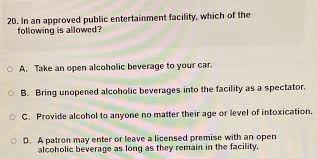
The answer lies in a phrase that matters a lot to venue owners, event planners, and safety officers: in an approved public entertainment facility which of the following is allowed.
Whether you’re managing a nightclub, opening a community theater, or just a curious attendee, understanding these rules helps everyone stay safe and legal. This article breaks down exactly what is and isn’t permitted in approved public entertainment facilities. We’ll cover noise limits, alcohol service, maximum occupancy, fire safety, and more—all in plain, simple language.
Let’s dive in.
What Does “Approved Public Entertainment Facility” Really Mean?
Before we answer in an approved public entertainment facility which of the following is allowed, we need to understand the definition.
An “approved public entertainment facility” is any venue that:
- Is open to the public (not private clubs or homes)
- Hosts entertainment like live music, movies, plays, sports, or dancing
- Has received official approval from local authorities (fire marshal, building department, and sometimes police)
- Must follow specific health, safety, and operational codes
Examples include:
- Concert halls
- Theaters (movie and live performance)
- Sporting arenas
- Nightclubs and dance halls
- Amusement parks with live shows
- Convention centers with entertainment stages
Without official approval, a venue cannot legally operate as a public entertainment space. Approval means regular inspections, proper permits, and enforced rules.
In an Approved Public Entertainment Facility Which of the Following Is Allowed? (Core Answer)
Let’s answer the main question directly.
In an approved public entertainment facility which of the following is allowed depends on local laws, but most jurisdictions agree on several standard permissions.
Here is a clear breakdown of what is typically allowed:
1. Alcohol Consumption in Designated Areas
Most approved facilities allow alcohol sales and consumption, but only in clearly marked zones. For example:
- Bars and lounge areas
- Table seating with drink service
- Some venues allow drinks inside the auditorium if cup lids are used
Example: A live theater may allow wine at your seat, but a standing-room concert might restrict alcohol to the rear concourse.
2. Amplified Music and Sound Effects
Yes, amplified sound is allowed. However, there are limits. Most cities enforce:
- A maximum decibel level (often 85–100 dB depending on time of day)
- Sound checks before opening hours
- No excessive bass that causes structural vibration
3. Dancing and Standing Audiences
In an approved public entertainment facility which of the following is allowed? Dancing is almost always allowed if the floor space meets safety codes. Standing-room areas are also permitted, but they must:
- Have clear aisles for emergency exit
- Not exceed the approved standing capacity (which is lower than seated capacity)
- Include railings or barriers in front of stages
4. Late-Night Operations (with Conditions)
Many approved facilities can operate past midnight. However, local noise ordinances often require:
- Reduced volume after 11 PM or midnight
- No outdoor amplified sound late at night
- Closing times set by a conditional use permit (often 2 AM for nightclubs)
5. Pyrotechnics and Special Effects
Surprisingly, small-scale pyrotechnics (sparks, flashes, smoke) are often allowed but only with:
- A licensed pyrotechnician on site
- Fire marshal approval for each event
- Fire extinguishers and fire curtains positioned nearby
Real-life use case: In 2019, a small theater in Ohio was fined for using a smoke machine without approval. The difference? Smoke machines are generally allowed, but they must not trigger fire alarms or block exit signs.
What Is NOT Allowed (Even in an Approved Facility)
To fully understand in an approved public entertainment facility which of the following is allowed, we also need what’s forbidden.
| Not Allowed | Why |
|---|---|
| Open flames without a permit | Fire risk |
| Exceeding posted occupancy | Crush hazard and blocked exits |
| Locked or obstructed emergency exits | Life safety violation |
| Unsupervised underage drinking | Legal liability |
| Blocking fire sprinklers with decorations | Fire suppression failure |
So even in an approved facility, you cannot do anything that violates basic life safety codes.
Key Rules You Must Know (Numbered List)
Here are the top 5 rules every event organizer or venue manager should memorize. These directly answer in an approved public entertainment facility which of the following is allowed:
- Allowed to serve alcohol up to a cutoff time (usually 1:30 AM to 2 AM, varies by city). After that, all drinks must be cleared.
- Allowed to have a capacity of up to 1,000+ people, but only if the facility has enough exits (minimum 2 exits for under 500 people, 3+ for larger crowds).
- Allowed to play recorded music without a live band, but you need a public performance license (from ASCAP or BMI).
- Allowed to admit minors if the event is all-ages, but minors must be in supervised areas after certain hours (e.g., no minors after 10 PM in some cities).
- Allowed to sell tickets at the door without pre-registration, but you must maintain a head count for fire safety.
Fire Safety: The Most Important Part of Approval
Fire marshals care about one thing above all: can everyone get out in under 3 minutes?
When we ask in an approved public entertainment facility which of the following is allowed, fire safety rules are non-negotiable.
Allowed fire safety measures:
- Portable fire extinguishers mounted every 75 feet
- Clearly lit “EXIT” signs (red or green depending on state)
- Emergency lighting that kicks in if main power fails
- Fire alarms that are tested monthly
Not allowed:
- Decorations that are not fire-rated (e.g., hay bales for a “country night” theme)
- Exits that open inward (they must open outward in crowds over 50)
- Locked exit doors, even to prevent unpaid re-entry
Tip for venue owners: Do a “dark walk” once a month. Turn off all lights and try to find an exit. If you get lost, so will your guests in an emergency.
Capacity Rules: Standing vs. Seated
One of the biggest misunderstandings about in an approved public entertainment facility which of the following is allowed involves capacity.
Seated capacity is higher than standing capacity. Wait—that sounds backwards. Let me explain.
- For seating: Each person takes about 6–8 square feet (including aisles). So a 5,000 sq ft room can hold roughly 625–830 seated people.
- For standing: Each person needs 3–5 square feet. That same room could hold 1,000–1,660 standing people. BUT most fire codes reduce standing capacity because crowd movement is harder to control.
In reality, many approved facilities are allowed to have mixed configurations: seated main floor, standing pit near stage, and balcony seating. However, the venue’s approval certificate will list a single maximum number for any configuration.
Example: A club might have a certificate for 300 people total. Even if they remove chairs to create a dance floor, they cannot exceed 300.
Noise and Disturbance Rules (What Neighbors Expect)
Another common question: in an approved public entertainment facility which of the following is allowed regarding noise?
Most cities allow 75–85 decibels inside the venue. Outside the building, at the property line, the limit is often 55–65 dB during the day and 45–55 dB after 10 PM.
Allowed noise control methods:
- Soundproof curtains
- Bass-absorbing panels under the stage
- Lobby double doors (airlock style)
- Limiting open windows or doors during performances
Not allowed:
- Operating subwoofers on an exterior wall facing homes
- Leaving loading dock doors open during loud acts
- Ignoring noise complaints without a sound study
Real-life case: A popular Brooklyn music venue was forced to close for three weeks after neighbors recorded 90 dB at 1 AM. The venue then installed rubber mounts under the stage and added a second set of exit doors. Now they comply fully.
Alcohol Service: What’s Permitted?
Let’s get specific about alcohol, since this is a huge part of entertainment facilities.
In an approved public entertainment facility, the following alcohol-related activities are allowed:
- Selling beer, wine, and spirits if you have a liquor license matching your occupancy (e.g., “Class C” or “Entertainment” license)
- Serving until a posted cutoff time (most places: 1:30 AM for last call, 2 AM finish drinking)
- Allowing patrons to carry drinks into performance areas only if the container is unbreakable (plastic or aluminum cups)
- Having self-serve beer walls or wine dispensers only if an employee monitors consumption
Not allowed:
- Open bar without an alcohol management plan
- Serving anyone who appears intoxicated (dram shop laws apply)
- Allowing glass bottles on a dance floor or mosh pit
- “Beat the clock” drink specials that encourage rapid drinking
FAQ Section
Q1: In an approved public entertainment facility which of the following is allowed regarding live animals?
A: Live animals are allowed only for legitimate entertainment (e.g., trained dogs in a circus, horses in a rodeo). However, petting zoos as part of entertainment require separate health permits. Emotional support animals are allowed, but service animals always take priority. No exotic wild animals (lions, tigers, bears) without special USDA approval.
Q2: Can I bring my own food into an approved public entertainment facility?
A: That depends on the venue’s policy, not fire code. Most theaters and concert halls do NOT allow outside food because they sell concessions. However, some approved facilities (like outdoor amphitheaters with lawn seating) do allow small snacks. The only legal restriction is that you cannot bring glass containers into a standing crowd area for safety reasons.
Q3: Are laser light shows allowed in approved facilities?
A: Yes, but with strict limits. Lasers must be Class 3b or lower without a variance. You cannot scan lasers into the crowd (audience scanning) unless you have a special FAA and FDA variance. Most venues allow lasers only above head height or aimed at designated walls/screens. Unauthorized laser use can result in immediate permit revocation.
Q4: In an approved public entertainment facility which of the following is allowed regarding smoking?
A: No indoor smoking is allowed in almost all US states and many other countries. This includes cigarettes, e-cigarettes, vapes, and herbal smoking products. However, approved facilities are allowed to have designated outdoor smoking areas if they are at least 25 feet from any entrance, air intake, or open window. Some venues also allow cigar lounges if they have separate ventilation systems and no minors present.
How to Check If Your Local Venue Is Properly Approved
You don’t have to guess. Here’s how a regular person or event planner can verify approval:
- Look for the posted occupancy certificate. By law, any approved public entertainment facility must display its maximum capacity and fire inspection date near the main entrance.
- Ask for the fire marshal’s last inspection date. A well-run venue will tell you willingly. If they get defensive, that’s a red flag.
- Check for clearly marked exits. Walk around before the event. You should see exit signs every 50–75 feet and emergency lighting.
- Watch for overcrowding. If staff keeps letting people in even after seats are full, that venue is violating its approval. Report it to the local fire marshal.
Strong Conclusion
So, let’s bring it all together.
When someone asks in an approved public entertainment facility which of the following is allowed, the answer is not a single sentence—it’s a framework. Approved facilities are allowed to serve alcohol in designated zones, play amplified music, host dancing and standing crowds, operate late with noise limits, and even use special effects like small pyrotechnics with proper permits. But they are never allowed to block exits, exceed capacity, ignore fire codes, or serve intoxicated guests.
The most important thing to remember is this: approval is a privilege, not a right. It comes from proving that your venue protects every single person inside. Whether you’re a concertgoer, a bar owner, or a local inspector, knowing these rules saves lives and prevents fines.
Next time you walk into a theater or club, take a quick look around. Spot the exits. Notice the occupancy sign. And enjoy the show—safe in the knowledge that you’re in an approved public entertainment facility that follows the rules.